

The latest news from the Centre for Business Research

Research centre news
Monitoring but not ending misery: global health falls short
The failure of health institutions to prevent harm in conflict is a political choice reflecting a lack of the neutrality that clinicians claim, argues a Comment in The Lancet Global Health publication co-authored by a Cambridge Judge academic.

Research centre news
Report finds stronger UK worker protection under new law
Legal protection for British workers under the Employment Rights Act 2025 will move closer to the Organisation for Economic Cooperation and Development (OECD) average, according to a new UK government report that uses the Labour Regulation Index of the Cambridge Centre for Business Research (CBR) at Cambridge Judge Business School.

Research centre news
Report on UK tech cites testimony from Cambridge Judge
The UK House of Lords Science and Technology Committee cited testimony and written evidence by David Connell, Senior Research Fellow at the Centre for Business Research at Cambridge Judge Business School, in a new report on the failure of UK technology companies to scale up to become global players. The report is entitled Bleeding to death: the science and technology growth emergency.

Research centre news
Paper says UK economic data issues reflected defective methodology
Data that seriously distort Britain’s post-war economic history arose because the UK’s Office for National Statistics (ONS) made errors that should have been easily spotted and adopted a highly defective methodology, says a new working paper written by Bill Martin, Senior Research Associate at the Centre for Business Research (CBR) at Cambridge Judge Business School.

Research centre news
New research on health resilience in conflict zones
The Centre for Business Research (CBR) at the University of Cambridge has published a policy brief by Dr Mona Jebril, Research Associate at CBR, on innovative strategies to strengthen health resilience amidst war and humanitarian crises in Gaza and similar conflict-affected areas.

Research centre news
How to spur UK growth through a new innovation policy
The co-author of a Centre for Business Research report, David Connell, tells a House of Lords panel that different policies are needed to keep promising startup firms in the UK.

Research centre news
Unlocking potential: tackling the refugee gap in the digital workforce
Across the world, companies are competing for tech talent while millions of refugees remain sidelined from formal work. This disconnect is not due to a lack of skills or motivation, but a lack of access. New research from Na’amal and Jobtech Alliance explores how digital employment pipelines can offer refugees sustainable livelihood opportunities – and what systems must be in place for them to participate meaningfully in the digital economy.

Research centre news
Employment Rights Bill: UK government cites CBR research
The UK government’s changes to the Employment Rights bill cites research on employment laws at the Centre for Business Research at Cambridge Judge Business School.

Student and alumni news
Impactful Gates Cambridge Scholars with Cambridge Judge ties
The Impact Prize for Gates Cambridge Scholars at the University of Cambridge honours alumni and postgrad students leaving an impact across the world. Three of 8 winners this year have ties to Cambridge Judge Business School.

Research centre news
Report released on legal framework for venture capital in Ukraine
Today (18 December) the Centre for Business Research (CBR) publishes a research report which assesses the role that legal and institutional reform can play in supporting a sustainable venture capital (VC) sector in Ukraine. The report is intended to inform Ukraine’s post-war reconstruction.

Research centre news
How the UK’s digital work ecosystem will evolve
A multi-university research project that includes the Centre for Business Research has been awarded £8.3 million to study the economic and social impact of AI and other technology on people’s working lives.

Research centre news
Corporate governance for sustainability: a popular but still unfulfilled agenda for change
4 years on from its publication in 2020, the Statement on Corporate Governance for Sustainability, coauthored by the Centre for Business Research (CBR) Research Associate and Warwick University law professor Andrew Johnston, has recently entered the SSRN all-time top 10 lists for Climate Change Law and Policy, and Sustainability Law and Policy. The Statement has had a major impact on the debate over the future of corporate governance.

Research centre news
CBR research associate Bernhard Reinsberg promoted to Professor
Congratulations to Bernhard Reinsberg, who we are delighted to announce has been promoted to Professor of International Political Economy and Development at the University of Glasgow with effect from 1 August 2024.

Research centre news
UK labour laws have fallen behind other developed countries
Britain lags the OECD average in areas ranging from working time to dismissal, says a report by the Trades Union Congress based on research at the Centre for Business Research.

Research centre news
How the UK could boost growth through better innovation policies
Selling less of the family silver: changes to UK policy could reduce the early sale of promising companies to overseas firms and increase economic growth, says new report.

Research centre news
Competition to identify Ukraine startups for VC investment
A competition and conference designed to promote post-war venture capital investment in Ukraine startups is organised by the Centre for Business Research at Cambridge Judge Business School.

Research centre news
Supervision award won by CBR director Professor Simon Deakin
Professor Simon Deakin, Director of the Centre for Business Research (CBR), awarded the 2023 Cambridge SU (students' union) prize for Postgraduate Research Supervision.

Research centre news
Humanising the migration crisis
The ongoing refugee and asylum seeker crisis in Europe and the UK is an opportunity to strengthen public health, the economy, labour markets and social cohesion. In the media and political hubbub surrounding the crisis, the personal stories, mental health and wellbeing of migrants, refugees and asylum seekers are absent. How can we design front-line mental health services for refugees, asylum seekers and local populations at risk in the UK?

Research centre news
Honorary CBR Research Associate awarded CBE
Congratulations to Graham Gudgin, Honorary Research Associate at the Centre for Business Research (CBR) at the University of Cambridge Judge Business School, for receiving a Commanders of the Order of the British Empire (CBE) in the 2023 New Year Honours list.

Research centre news
Promotion for Dr Giorgio Caselli
We are delighted to announce that Dr Giorgio Caselli has been promoted to Senior Research Fellow with effect from 1 January 2023. Congratulations Giorgio!

Governance, economics and policy
How to tackle the UK’s muddled and ineffective policy for growing the innovation economy
The UK needs an ‘Independent Office for Innovation and Industrial Policy’ similar to the Office for Budget Responsibility, says submission by Cambridge Judge Business School expert at the request of the House of Commons Select Committee on Science and Technology.

Equality, diversity and inclusion
A look at marginalised communities: what Cambridge Judge research and initiatives can teach us
In this special insight article, we look at some of the work done at Cambridge Judge to highlight issues affecting the marginalised and point a way forward to solving them, and we also talk to some of those involved in these important initiatives.

Research centre news
Researcher wins Best Paper Award
A new, prestigious international award for a Centre for Business Research (CBR) researcher.
Research centre news
The IMF and the road to a green and inclusive recovery after COVID-19
Since the onset of the COVID-19 (coronavirus) pandemic, the International Monetary Fund (IMF) has reasserted its role as the world’s leading financial firefighter.

Interactions between UK businesses and universities are broad based and beneficial, but are being held back by firms' lack of capacity and information to tap this key resource, says a new report co-authored at Cambridge Judge Business School.

Faculty news
Public or private energy?
Renationalisation is not the solution to the current supply and pricing issues in the energy market, Professor Michael Pollitt of Cambridge Judge says in a new podcast.

News
Research impact
R&D study by David Connell of the Centre for Business Research at Cambridge Judge Business School is cited by UK Chancellor of the Exchequer Rishi Sunak in a high-profile lecture.

News
Lebanese health
Lebanon’s health services should be given far greater priority in economic recovery policies by donor governments, says new report co-authored at the Centre for Business Research at Cambridge Judge Business School.

Insight
Gaza health care
Improve information flows and build cooperation between stakeholders in the health sector in Gaza to address continuing humanitarian needs, says report from the Centre for Business Research at Cambridge Judge.

Insight
Industrial policy failure
The UK's £7.3 billion flagship research and development tax credit scheme is failing to stimulate the additional spending required to meet the Government's R&D target, concludes a new report from the Centre for Business Research at Cambridge Judge Business School.

Insight
Governing catastrophes
Re-learning how to manage risk can be a template for the future governance of crises, say academics from the Centre for Business Research at Cambridge Judge Business School.

Insight
‘Underwhelming’ response
Despite G20 pledge to do "whatever it takes", the IMF has offered only 'trivial' new funding toward a $2.5 trillion pandemic financing gap in developing countries, says new article co-authored at Cambridge Judge Business School.

Insight
Mental health
People with coronavirus symptoms more likely to have general psychiatric disorders and loneliness, says study co-authored at Cambridge Judge Business School.

Calls for companies to reduce working hours instead of cutting jobs help mental health and to boost the economy after the pandemic.

Research centre news
Major international collaboration on critical behavioural science theory lead by CJBS affiliates
A new study co-authored Dr Kai Ruggeri and Dr Tomas Folke, from the Centre for Business Research, replicates influential Prospect Theory that describes how people make choices when faced with risky decisions.

Research centre news
ASSET: new measure of economic and financial literacy
ASSET is a new short scale that evaluates financial literacy in teenagers and young adults, developed by researchers at Cambridge Judge Business School.

Research centre news
Joint research project on legal systems and AI selected for funding by UKRI and JST
A research project on legal systems and artificial antelligence (AI), based on collaboration between Hitotsubashi University, Japan, and the University of Cambridge, UK, has been selected for funding following a joint call by UK Research and Innovation (UKRI) and the Japanese Science and Technology Agency (JST).

Insight
Privatisation and corruption
Privatisation of state-owned enterprises in IMF loan conditions can increase corruption through a 'vicious circle' of weaker institutions and increased incentives, says a new study co-authored at Cambridge Judge Business School.

Insight
The IMF and ‘conditionality’
Structural conditions imposed on developing countries by the International Monetary Fund undermine their 'state capacity' for economic development, finds study led at Cambridge Judge Business School.

British Prime Minister Theresa May famously said that some international elites are a "citizen of nowhere", but a new academic study concludes that foreign-born academics working in Britain are highly engaged in both UK and international activities such as joint research, networking providing informal advice.

Findings dispute "guns versus butter" narrative as a major factor behind the Arab Spring. Researchers caution against uncritically applying lessons from Western nations to interpret public policy decisions in the Middle East.

Researchers have built the single largest dataset of employment laws – spanning more than 100 countries across much of post-war history – to look at how worker rights affect economies over decades.

News
Treasury economic modelling is flawed say economists from the Centre for Business Research (CBR)
New research from the Centre for Business Research (CBR) at the University of Cambridge Judge Business School questions the accuracy of measurements of the impact of Brexit on the UK economy undertaken by the Treasury and by other official and academic bodies, during and after the Referendum.

Research centre news
Small business jumpstart
Author of industrial strategy review of the UK Small Business Research Initiative calls for increased focus on customer-funded innovation contracts to allow founders to grow substantial UK firms.

Research centre news
Lebanon Livelihoods report
Lorraine Charles, Research Associate at the Centre for Business Research, publishes new report on the economic opportunities and challenges for Palestinians and Lebanese in the shadow of the Syrian crisis.

Research centre news
Research Fellow in Corporate Growth and Regional Development
The University of Cambridge seeks to appoint a full-time research fellow at the Centre for Business Research to work on an exciting new project studying the activities of companies in the local region and their impact on regional growth. The successful candidate will join a dynamic and interdisciplinary research environment, and collaborate with scholars in the fields of economics, architecture, town planning, geography and land economy.

Misc news
Small business review
David Connell of the Centre for Business Research at Cambridge Judge to lead review on UK government Small Business Research Initiative.

New research findings from two of the UK's top universities, Cambridge and Manchester, reveals giving workers employment rights increases productivity and profitability.

News
VC and patents
Venture capital investment does not boost patents by technology firms, finds new study at University of Cambridge Judge Business School.

Misc news
Picking up the trail where the suffragettes left off – a Cambridge win for Westminster’s women MPs
The Cambridge-based web production company of CBR policy associate Boni Sones OBE has been internationally recognised for a two-part radio documentary it produced about women in parliament.

Liberal UK economic policies since 1979 have not spurred growth, says report from the Centre for Business Research at Cambridge Judge Business School.

Renewed UK government spending on innovative R&D can create new industries.

Misc news
Why the new nuclear power contract between EDF and the UK government should be re-negotiated
The BBC's Today programme interviewed David Howarth about the findings from the Centre for Business Research (CBR)'s workshop on the nuclear power contract under negotiation between EDF and the UK government.

Research centre news
New evidence: science investment boosts growth
A new independent report for for the Campaign for Science and Engineering (CaSE), authored by Jonathan Haskel, Alan Hughes and Elif Bascavusoglu-Moreau, shows that investing public money in science and engineering is good for the economy.

Misc news
Cultural connections: the role of the arts and humanities in competitiveness and local development
A new report from the Centre for Business Research (CBR), Cultural Connections: The Role of the Arts and Humanities in Competitiveness and Local Development, considers how the arts and cultural institutions contribute to the appeal of place.

Entrepreneurship and innovation
Innovation policy needs to change
A Cambridge economist and government advisor is calling for a new approach to innovation policy designed to stimulate significant fiscal growth. Investing in technology innovation, although important for the long term, will not address the current need.

The cost of R&D and innovation is the subject of an award-winning paper by CJBS's Andrea Mina.

Misc news
The future of manufacturing
Launch of final project report from the Foresight Lead Expert Group.

After nearly 20 years as Director of the Centre for Business Research (CBR), Professor Alan Hughes is standing down from this position, but will continue to play a major role in the Centre as Director of the UK~IRC, as a University Director of Research and as Director of the University's ESRC Social Science Impact Acceleration Programme.
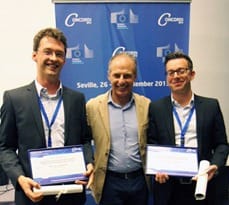
The CONCORDi-2013 Scientific Committee granted the CONCORDi-2013 Best Paper Award to the best selected work presented at the 4th European Conference on Corporate R&D and Innovation which took place on 26-27 September 2013 in Seville.
The National Centre for Universities and Business (NCUB) has announced the appointment of Professor Alan Hughes, Director of the Centre for Business Research (CBR), as one of NCUB's first Senior Research Fellows.

In this note Bill Martin and Bob Rowthorn of the Centre for Business Research (CBR) respond to the recent critique by Goodridge, Haskel & Wallis of their 2012 study of Britain's productivity puzzle, Is the British Economy Supply Constrained II? A Renewed Critique of Productivity Pessimism.

A paper by Henry Lahr, Research Associate at Centre for Business Research (CBR), has been published in the European Accounting Review.
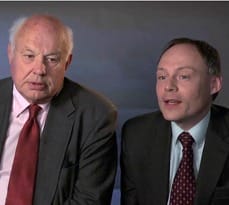
Dr Ian Jones and Dr Michael Pollitt argue that the governance laid down in the Cadbury Code has been interpreted too narrowly and the human side has been missed.

The Centre for Business Research (CBR) and the UK Innovation Research Centre (UK~IRC) have released a new report, The Dual Funding Structure for Research in the UK: Research Council and Funding Council Allocation Methods and the Pathways to Impact of UK Academics.

The Re-igniting Growth report examines some of the challenges the UK faces after the economic downturn and explores a range of initiatives or challenges to policy that could help kickstart growth.

In 2011 the Enhancing Value Taskforce was launched by the Council for Industry and Higher Education (CIHE) in conjunction with the UK~IRC to answer the question: "How do we make the most of the UK research base?"
Intervene or stand back – what should be the industrial strategy for the UK?

The report from the Heseltine Review published today, No Stone Unturned in Pursuit of Growth, looks at ways of making the UK economy more competitive – recommending a National Growth Council and distributing funds locally rather than through central government as some of the measures.

The Centre for Business Research (CBR), based at Cambridge Judge Business School, is delighted to announce that Kate Barker CBE has become the new Chair of its Advisory Board.

The Council for Industry and Higher Education (CIHE) and the UK Innovation Research Centre (UK~IRC) Enhancing Value Taskforce has published the second major report in the series arising from their research.

Macroeconomist Michael Kitson says economics needs to be more humble and more relevant.
Internationally renowned innovation expert Professor Alan Hughes has been appointed as the Queensland Government Innovator in Residence, based at the University of Queensland Business School.

A project on Labour Law and Poverty Alleviation in Low- and Middle-Income Countries will be funded under the joint ESRC/DFID Joint Scheme on International Development (Poverty Alleviation).

The UK~IRC hosted a two-day conference on Open Innovation on 25-26 June 2012 at Imperial College London.

The House of Commons Select Committee agreed on 14 December 2011 to launch a new inquiry: Bridging the "Valley of Death": Improving the Commercialisation of Research.
Misc news
The British economy: where to now?
Is this British economy in danger of slipping into a permanent state of stagnation because of failing private sector confidence and weak demand, or is it, as many policy makers believe, constrained by deep-seated structural defects?

Following a workshop that was co-organised by the UK Innovation Research Centre (UK~IRC) and the Cambridge Journal of Economics (CJE) on 'Universities and the Knowledge Economy', a special issue of the journal has been published.

Video
Rethinking economics
Macroeconomist Michael Kitson of Cambridge Judge Business School compares the current global recession to the Great Depression of the 1930s and feels that austerity is here for a long time unless there is a change in economic policy, globally, as well as in the UK.

Podcasts
Rethinking economics
Highly respected macroeconomist Michael Kitson of Cambridge Judge Business School says a regime change in economics is needed to haul the country out of austerity and ensure long-term growth.

Radical changes to the UK's immigration policy are a 'kneejerk' reaction to the economic crisis warns leading economist Michael Kitson.

Members of the Centre for Business Research (CBR) contributed to the final conference of the FP7 FINNOV project (Finance, Innovation & Growth), which focused on the need for finance to be reformed so that it serves innovation and value creation – rather than innovation serving finance and too much value destruction.

Access news about the Centre for Business Research (CBR) from 2011.
Research centre news
Centre for Business Research (CBR) news from 2010
2010 research news and insights from Cambridge’s Centre for Business Research, highlighting policy, innovation and economic studies.
Research centre news
Centre for Business Research (CBR) news from 2009
Key 2009 CBR research on academic–industry links, innovation, and award‑winning studies shaping UK knowledge exchange.

Research centre news
Centre for Business Research (CBR) news from 2008
Highlights from 2008 on innovation systems, governance research, awards and hidden R&D analysis across East of England firms.
Research centre news
Centre for Business Research (CBR) news from 2007
Insights into Australia’s 1980–2004 productivity drivers, key CBR research milestones, awards, and policy impacts across 2007.
Research reveals how UK firms’ absorptive capacity and regional differences shape innovation, collaboration patterns, and policy implications.
Research centre news
Centre for Business Research (CBR) news from 2005
Insights into 2005 CBR research on retail models, innovation systems, globalisation, productivity, governance and firms’ responses to economic shocks.
Research centre news
Centre for Business Research (CBR) news from 2004
Insights from 2004 CBR research on UK-US innovation, acquisition performance, corporate governance, venture capital law and science policy.
Research centre news
Centre for Business Research (CBR) news from 2003
CBR’s 2003 research explores Enron’s lessons, high‑tech entrepreneurship, SME challenges, skills shortages and UK corporate governance trends.
Research centre news
Centre for Business Research (CBR) news from 2002
Insights from 2002 CBR events on financial regulation, company law reform, work‑life balance, and legal influences on venture capital and governance.